
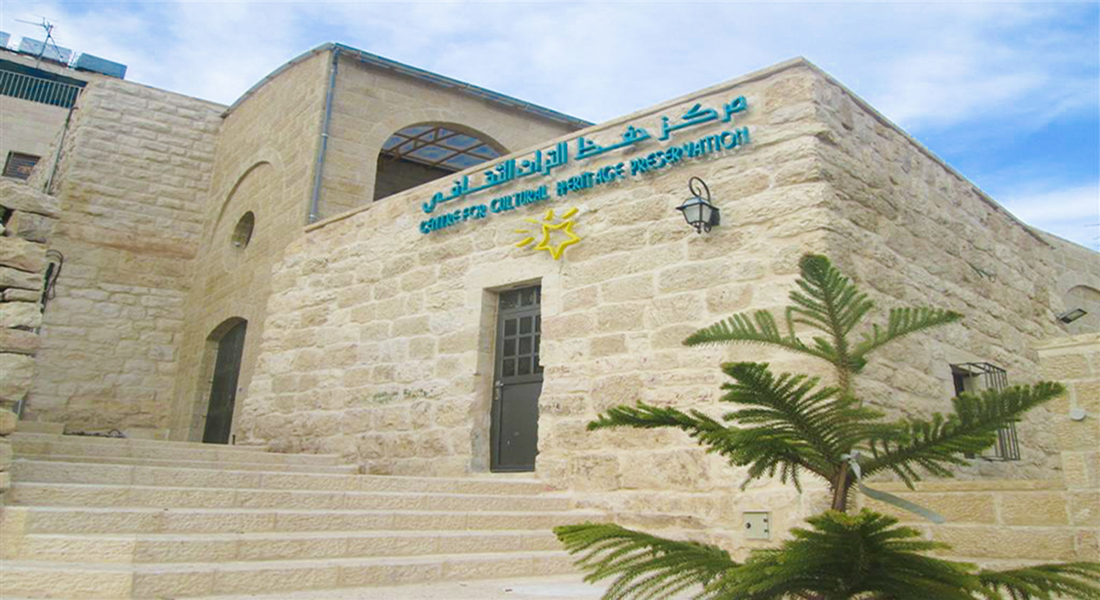

The Centre for Cultural Heritage Preservation and the Ministry of Tourism and Antiquities Launch the Findings of Phase II of the Damage and Risk Assessment of Cultural Heritage Sites in the Gaza Strip
The Centre for Cultural Heritage Preservation (CCHP), in cooperation with the Palestinian Ministry of Tourism and Antiquities, launched the findings of the report entitled “Gaza Cultural Heritage Damage and Risk Assessment – Phase II” during an event held at the Ministry of Tourism and Antiquities headquarters in Bethlehem on Monday, 23 November 2026. The event brought together representatives of national and international ministries and institutions, as well as partners working in the field of cultural heritage protection, both in person and via Zoom.
The launch event was attended by H.E. Mr. Hani Al-Hayek, Minister of Tourism and Antiquities; representatives of the Ministry; Ms. Shahida MacDougall, Director of the British Council in Palestine; and representatives of the EAMENA Project at the University of Oxford, who joined via Zoom, alongside representatives of local and international institutions and partners.
This report builds on the comprehensive assessment of damage and risks affecting cultural heritage in the Gaza Strip, the first phase of which was completed in February 2025 through cooperation between CCHP, the Palestinian Ministry of Tourism and Antiquities, and the EAMENA Project at the University of Oxford, with support from the British Council through its Cultural Protection Fund (CPF). Following the resumption of military operations between March and October 2025, which resulted in further damage to archaeological sites, historic buildings, and cultural landmarks, an urgent need emerged to update the previous assessment, document changes in the condition of the sites, and provide updated data to support protection, recovery, and reconstruction efforts.
Phase II was implemented between March and July 2026 through technical cooperation between CCHP, the Ministry of Tourism and Antiquities, and the EAMENA Project at the University of Oxford, with funding from the British Council through the Cultural Protection Fund. The study adopted a methodology combining field surveys in areas that could be accessed with satellite imagery analysis and remote sensing techniques for areas that remained inaccessible. This was complemented by photographic documentation, the recording of geographical coordinates, the use of Geographic Information Systems (GIS), archival research, and comparison of the findings with data from Phase I.
The assessment covered 376 cultural heritage sites and assets across the Gaza Strip, comprising 244 sites in the Yellow Zone and 132 sites in the Red Zone. The study covered various categories of cultural heritage, including historic buildings, archaeological sites, buildings of heritage significance, landmarks, museums, historic cemeteries, and natural heritage sites.
The assessment findings recorded 110 sites as completely destroyed, 91 sites with severe damage, 48 sites with high levels of damage, 46 sites with moderate damage, and 40 sites with low levels of damage. No damage was recorded at 31 sites, while 10 sites were classified as not applicable for damage classification, as they had been completely destroyed. The findings indicate that 249 sites, representing 68% of the total sites assessed, fall within the categories of complete destruction, severe damage, and high damage. This reflects the significant deterioration in the condition of cultural heritage across the Gaza Strip compared with the findings of Phase I. The report also provides an updated database on the condition of the sites and the levels of damage and risks they face, serving as a technical reference to support the Ministry of Tourism and Antiquities and its partners in identifying intervention priorities, directing emergency stabilisation and protection works, and planning conservation, restoration, recovery, and reconstruction programmes.
The implementation of this phase presented significant challenges due to security conditions and difficulties in accessing a number of of sites. This required combining fieldwork with remote assessment techniques and drawing on the technical and technological expertise of the project partners. The report highlights the importance of continuing documentation and monitoring efforts and strengthening technical and financial support to help prevent further losses threatening the cultural heritage of the Gaza Strip. The Centre for Cultural Heritage Preservation emphasises that this report represents a fundamental step in documenting and protecting Palestinian cultural heritage in Gaza. It provides an informational and technical foundation upon which response, recovery, and reconstruction plans can be developed, contributing to the safeguarding of this cultural legacy and preserving its historical, architectural, and social significance for future generations.
To view the report please Click here
To view the Site Identification Forms - Yellow Zone please Click here
To view the Survey Forms - Yellow Zone please Click here
To view the Survey Forms - Red Zone please Click here
 O-Sense